
Complete 2026 Guide

SSC Exam Preparation 2026.The only guide you need.

CGL, CHSL, MTS, CPO & Stenographer — complete 2026 syllabus, exam patterns, 12-month plans, subject strategies, mock test analysis, and AI-powered coaching. Everything for your government job dream.

Vacancy estimates based on previous years ₹25,000–₹80,000/month basic pay Permanent government job

Salary note: Basic salary range across SSC posts; in-hand varies by city and allowances (HRA + DA) and can reach about ₹80K–₹1L for senior posts.

15+

Exams Annually

50K+

Vacancies/Year

₹80K

Max Salary/Month

100%

Job Security

Vacancy estimates based on historical trends; official 2026 numbers pending.

What is SSC?
Understanding Staff Selection Commission.

The Staff Selection Commission (SSC) is India's premier government recruitment organization, established in 1975 with headquarters in New Delhi. It conducts competitive examinations to recruit staff for various central government ministries, departments, and organizations.

Established

1975

Headquarters

New Delhi

Exams Annually

15+

Vacancies/Year

50,000+

Eligibility

Indian citizens (specific qualifications)

Difficulty

1 in 2,000–10,000 applicants

Career Benefits

  • Permanent central government job
  • Job security for life
  • ₹25,000–₹80,000/month basic pay range (allowances extra)
  • Pension benefits after retirement
  • Medical facilities for employee + family
  • Annual, casual & sick leave (31+ days)
  • Promotion opportunities based on merit
  • Transfer flexibility across India
  • Respect & status in society

Who Should Apply

  • 12th pass (for MTS, CHSL)
  • Bachelor's degree (for CGL, JHT)
  • Professional qualifications (specialized posts)
  • Age 18–32 years (varies by exam)
  • Want stable, secure government job
  • Willing to work in central government offices
  • Can commit 6–12 months for preparation

Why SSC is Competitive

  • Permanent government employment
  • No age bar for promotion
  • Excellent pension scheme
  • Job security (can"t be fired without inquiry)
  • Widespread awareness across India
  • Multiple attempts allowed (age dependent)

Salary note: Basic salary range across all SSC posts; in-hand varies by city and allowances (HRA + DA). Example: Basic ₹50,000 + HRA ₹12,000–₹24,000 + DA ₹20,000–₹25,000 = In-hand about ₹80,000–₹1,00,000 for senior posts.

Competition Statistics

ExamApplicantsVacanciesRatio
SSC CGL10 lakh+8,000–10,0001:100
SSC CHSL8 lakh+3,000–5,0001:160
SSC MTS20 lakh+10,000–15,0001:200

* Vacancy estimates based on historical trends; official 2026 numbers pending.

All SSC Exams

SSC Exam Types.
Choose your path to a government job.

SSC conducts 6 major exam categories. Each has different eligibility, difficulty, and vacancy count.

SSC CGL

Combined Graduate Level

High
EligibilityBachelor's degree
PostsInspector of Income Tax, Inspector of Customs, ASO, Statistical Investigator
Vacancies8,000–10,000/year (historical estimate)

Exam Pattern

  • Tier 1: MCQ — 200 marks, 60 min (Online)
  • Tier 2: MCQ + Descriptive — 300+100 marks, 120+60 min
  • Tier 3: CPT — Computer Proficiency Test
  • Tier 4: Document Verification + Physical Test

SSC CHSL

Combined Higher Secondary Level

Medium
Eligibility12th pass from recognized board
PostsLDC, Data Entry Operator, Court Clerk
Vacancies3,000–5,000/year (historical estimate)

Exam Pattern

  • Tier 1: MCQ — 100 marks, 60 min (Online)
  • Tier 2: Descriptive + Typing/Skill Test (same session, updated 2026 pattern)
  • No separate Tier 3 in updated 2026 workflow

SSC MTS

Multitasking Staff

Moderate
Eligibility12th pass from recognized board
PostsMultitasking Staff (Grade III), Havaldar, Rifleman
Vacancies10,000–15,000/year (historical estimate)

Exam Pattern

  • Tier 1: MCQ — 100 marks, 90 min (Online)
  • Tier 2: Descriptive — 50 marks, 30 min (Offline)

SSC CPO

Central Police Organization

High
EligibilityBachelor's degree + Physical fitness
PostsSub-Inspector (SI), Assistant Sub-Inspector (ASI)
Vacancies3,000–5,000/year (historical estimate)

Exam Pattern

  • Tier 1: MCQ — 200 marks
  • Tier 2: MCQ + Descriptive — 200 marks
  • Physical Endurance Test (PET)
  • Medical Examination

SSC Stenographer

Grade C & D

High (requires unique skill)
EligibilityBachelor's degree (Grade C), 12th pass (Grade D)
PostsStenographer in various government offices
Vacancies500–1,000/year (historical estimate)

Exam Pattern

  • Written Exam — 200 marks (Skill-based)
  • Skill Test: Shorthand + Typing (80–120 WPM)

SSC JHT

Junior Hindi Translator

Medium–High
EligibilityBachelor's degree with Hindi + English proficiency
PostsJunior Hindi Translator in government departments
Vacancies200–300/year (historical estimate)

Exam Pattern

  • Written Exam — 200 marks
  • Interview — 100 marks

* Vacancy estimates based on historical trends; official 2026 numbers pending.

Syllabus Deep Dive

Complete Syllabus.
Every topic covered for CGL, CHSL, MTS.

Tier 1 — 200 Marks, 60 Minutes

General Intelligence & Reasoning

50 marks
  • Analogies (similarity/dissimilarity)
  • Classification (odd one out)
  • Analytical reasoning & symbolic operations
  • Venn diagrams & Matrix
  • Blood relations & Directions
  • Coding-decoding & Series completion
  • Puzzle & Word problems

General Awareness

50 marks
  • History of India (Ancient, Medieval, Modern)
  • Indian Polity & Constitution
  • Geography (India + World)
  • Economics & Banking basics
  • Science & Technology
  • Current Affairs (6 months)
  • Sports, Culture & Heritage, Awards

Quantitative Aptitude

50 marks
  • Numbers: HCF, LCM, Divisibility
  • Percentages, Ratio & Proportion
  • Speed, Time & Distance; Profit-Loss
  • Simple & Compound Interest, Time & Work
  • Geometry & Trigonometry
  • Algebra: Equations & Inequalities
  • Data Interpretation (Tables, Charts, Graphs)

English Language

50 marks
  • Reading Comprehension
  • Cloze test & Spotting errors
  • Phrase replacement & Sentence correction
  • One-word substitution & Idioms
  • Active-passive & Direct-indirect speech
  • Synonyms & Antonyms
  • Spelling correction
SectionTotal MarksTarget ScoreQuestions to AttemptAccuracy
Reasoning5035+40–4570%+
General Awareness5025+35–4055%+
Quantitative Aptitude5030+40–4565%+
English5030+40–4565%+
Paper 1: Quantitative Abilities(200 marks, 120 min)

All Tier 1 QA topics at deeper level — Advanced Data Interpretation, Trigonometry (complex angles), Coordinate geometry, Quadratic equations, Polynomials

Paper 2: English Language & Comprehension(200 marks, 120 min)

Long passages for reading comprehension, Essay writing, Letter writing, Précis writing, Advanced error spotting, Narration (reported speech), Context-based synonyms & antonyms

Paper 3: Statistics(100 marks, 60 min)

Optional — for specific posts only. Statistical methods, probability, sampling, correlation, regression, time series

Paper 4: General Studies (Finance & Economics)(100 marks, 60 min)

Optional — for specific posts only. Macro/micro economics, financial accounting, company law, audit, budget concepts

🎯 Target Score: 120+/200 to qualify Tier 1 comfortably. Aim for 65–70% accuracy on 80–85% questions attempted.
Specialized Exams

SSC Stenographer, JHT & CPO.
Specialized roles with unique preparation needs.

SSC Stenographer

Grade C & D

Eligibility: Grade C: Bachelor's; Grade D: 12th pass
Vacancies: 500–1,000/year
Difficulty: High (requires unique skill)

Unique Challenge

Shorthand dictation speed: 80–120 WPM depending on grade

Preparation Strategy

  • Learn shorthand symbols (Pitman/Teeline)
  • Practice dictation: 20 min daily
  • Typing speed: 40+ WPM (essential)
  • Written test: General English + Stenography

SSC JHT

Junior Hindi Translator

Eligibility: Bachelor's + Hindi/English proficiency
Vacancies: 200–300/year
Difficulty: Medium–High

Unique Challenge

Hindi writing fluency & translation skills

Preparation Strategy

  • Hindi comprehension & writing practice
  • English comprehension
  • Translation: English ↔ Hindi
  • Interview preparation (Hindi communication)

SSC CPO

Sub-Inspector

Eligibility: Bachelor's degree + Physical fitness (Height 165cm M / 150cm F, Chest expansion)
Vacancies: 3,000–5,000/year
Difficulty: High (written + physical)

Unique Challenge

Written exam + Physical Endurance Test + Medical

Preparation Strategy

  • Written exam — similar to CGL level
  • Physical training: Running, long jump, shot put
  • Medical fitness: Vision, hearing, overall health
  • Unique advantage: Police career & authority
Strategy

12-Month Preparation Plan.
From zero to selection list.

A phase-wise roadmap used by successful candidates. Each phase builds on the previous one with clear goals and daily targets.

01

Month 1

Foundation Building

4–5 hrs/day
  • Week 1–2: Reasoning basics — analogies, classifications (10/day, target accuracy first)
  • Week 3–4: Math foundation — LCM, HCF, percentages, profit-loss (20 Qs/day, 70%+ accuracy)
  • Week 5: English basics — grammar, tenses, parts of speech (5 grammar rules/day)
  • Week 6: GA overview — Indian history dates, capitals, Constitution (100 facts/week)

Goal: Strong foundation in all 4 sections

02

Month 2–3

Intermediate Learning

5 hrs/day
  • Month 2: Reasoning deep dive — coding-decoding, syllogism, Venn diagrams (50 Qs/day, 80%+)
  • Month 3: Quantitative Aptitude — geometry, trigonometry, data interpretation (50 Qs/day)
  • Speed target: 1 question per 1.5 minutes at 75%+ accuracy
  • First mock test at end of Month 2 (baseline score)

Goal: 80%+ accuracy in reasoning, 75%+ in QA

03

Month 4–5

English + GA Mastery

5 hrs/day
  • Month 4: English — 5 RC passages/day, 20 error spotting/day, 20 vocabulary words/day
  • Month 5: GA — Indian history (Modern), geography, political system, economics
  • Current affairs: Read 2 news sources daily, make notes (10 facts/day)
  • Science & technology, sports updates

Goal: 70%+ accuracy in English, 75%+ in GA

04

Month 6–7

Speed Building

6 hrs/day
  • Month 6: Timed practice — 50 questions per section in target time
  • Reasoning: 50 Qs in 50 min | QA: 50 Qs in 45 min | English: 50 Qs in 30 min | GA: 50 Qs in 35 min
  • Month 7: Strategy development — optimal question order, weak topic identification
  • Guessing strategy for last 30 seconds, time-saving techniques per section

Goal: 120+ out of 200 in timed full mock

05

Month 8–9

Mock Test Phase

5–6 hrs/day
  • Month 8: 3–4 full-length mock tests per week
  • After each mock: Section analysis, accuracy, time spent, weak spots
  • Month 9: Adaptive learning — 100+ questions in each weak area
  • Review unclear concepts, attempt 5+ mocks

Goal: Target Tier 1 score: 120–140/200

06

Month 10–11

Advanced Preparation

5 hrs/day
  • Month 10: Advanced QA — complex geometry, trig, advanced DI
  • Tier 2 prep (CGL): Essay writing, précis, formal letters (10+ Tier 2 mocks)
  • Month 11: Speed + accuracy optimization — 80–90 Qs in 60 min at 65%+ accuracy
  • 5+ mock tests per week, sectional speed targets

Goal: Comfortable at 140–155 out of 200

07

Month 12

Final Strategy

4 hrs/day
  • Week 1–2: 5+ full-length mocks, confirm exam-day strategy
  • Section order: GA → English → QA → Reasoning
  • Week 3–4: Light revision only, sleep 8 hrs/night
  • Final mock 2 days before exam, read instructions carefully

Goal: 150–160/200 — exam ready

Fast Track

6-Month Intensive Plan

For: Already have basic knowledge, need quick preparation

Daily commitment: 6–8 hrs/day (weekdays), 4 hours (weekends)

Month 1–2

Subject mastery (all topics, skip foundations)

Month 3–4

Speed building (accuracy + time simultaneously)

Month 5

Mock test analysis & weak area focus (100+ mocks)

Month 6

Final strategy + confidence building

Subject Mastery

Subject-Wise Preparation.
Detailed strategy for every section.

Speed Target

1.5 min/question → 1 min/question

Accuracy Target

65%+

🔴 High-Priority Topics (40% of section)

Speed, Time & Distance~12%

30 problems/week

Relative speed, boats & streams, circular motion

Data Interpretation~12%

20 DI sets/week

Tables, pie charts, bar graphs, line graphs

Percentages & Profit-Loss~10%

40 problems/week

Discount, markup, partnership

Ratios, Averages & Mixtures~8%

30 problems/week

Simple ratios, weighted averages, alligation

🟡 Medium-Priority Topics (40% of section)

Simplification & Approximation~10%

50 problems/week

BODMAS, surds, indices

Geometry & Trigonometry~10%

40 problems/week

Triangles, circles, quadrilaterals, heights & distances

Algebra~8%

30 problems/week

Linear/quadratic equations, polynomials, sequences

🟢 Lower-Priority Topics (20% of section)

Number System & Arithmetic

20 problems/weekHCF, LCM, divisibility, SI, CI, Time & Work

Common Mistakes to Avoid

Rushing through calculations → silly errors
Take time to read, then solve methodically
Wrong unit interpretation (minutes vs hours)
Always check the unit before computing
Attempting too many questions at low accuracy
Target 40–45 attempts at 65%+ accuracy
Post-Mock Workflow

What to do after every SSC mock.
Score first. Diagnosis second. Action plan third.

The strongest gains come from what you do after the test, not from taking one more random test. This flow keeps your prep measurable and repeatable.

Step 01

See what happened in one glance

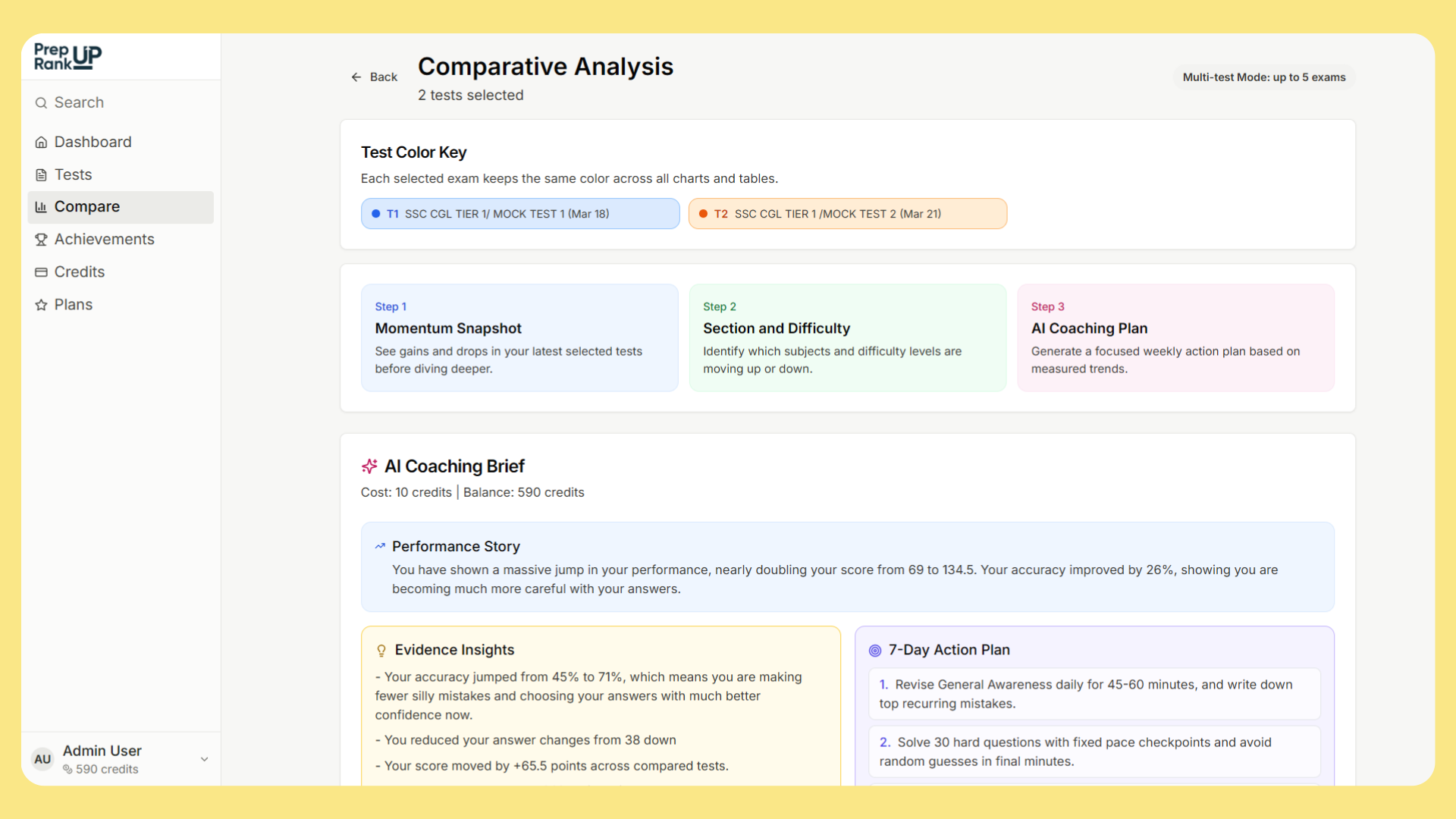
Start with score, attempts, and section split so you can spot where the test tilted against you before diving into details.
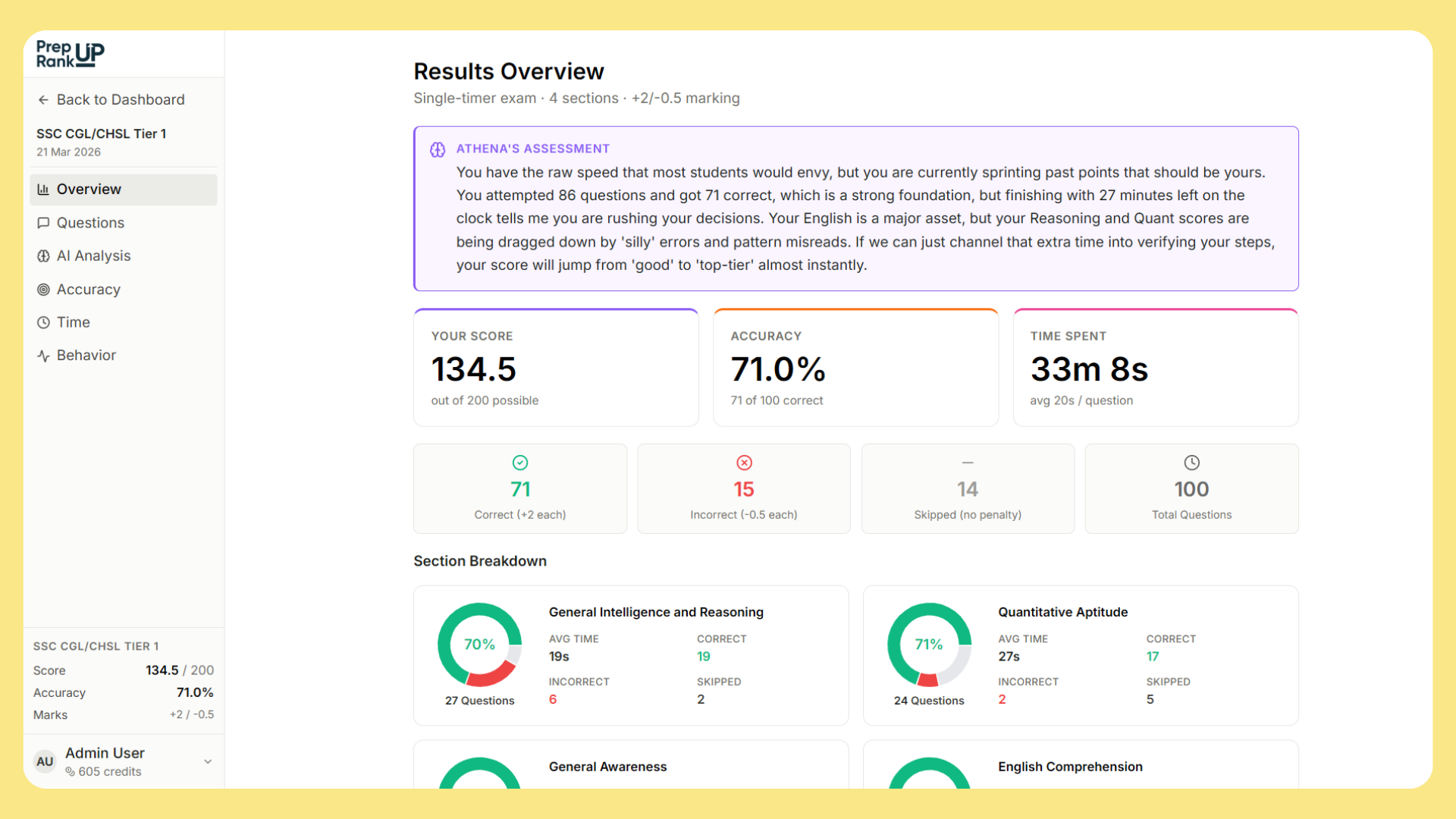
See what happened in one glance
Step 02

Read Athena recommendations

Use the AI summary to identify your highest-impact fixes for the next 7 days instead of re-studying everything.
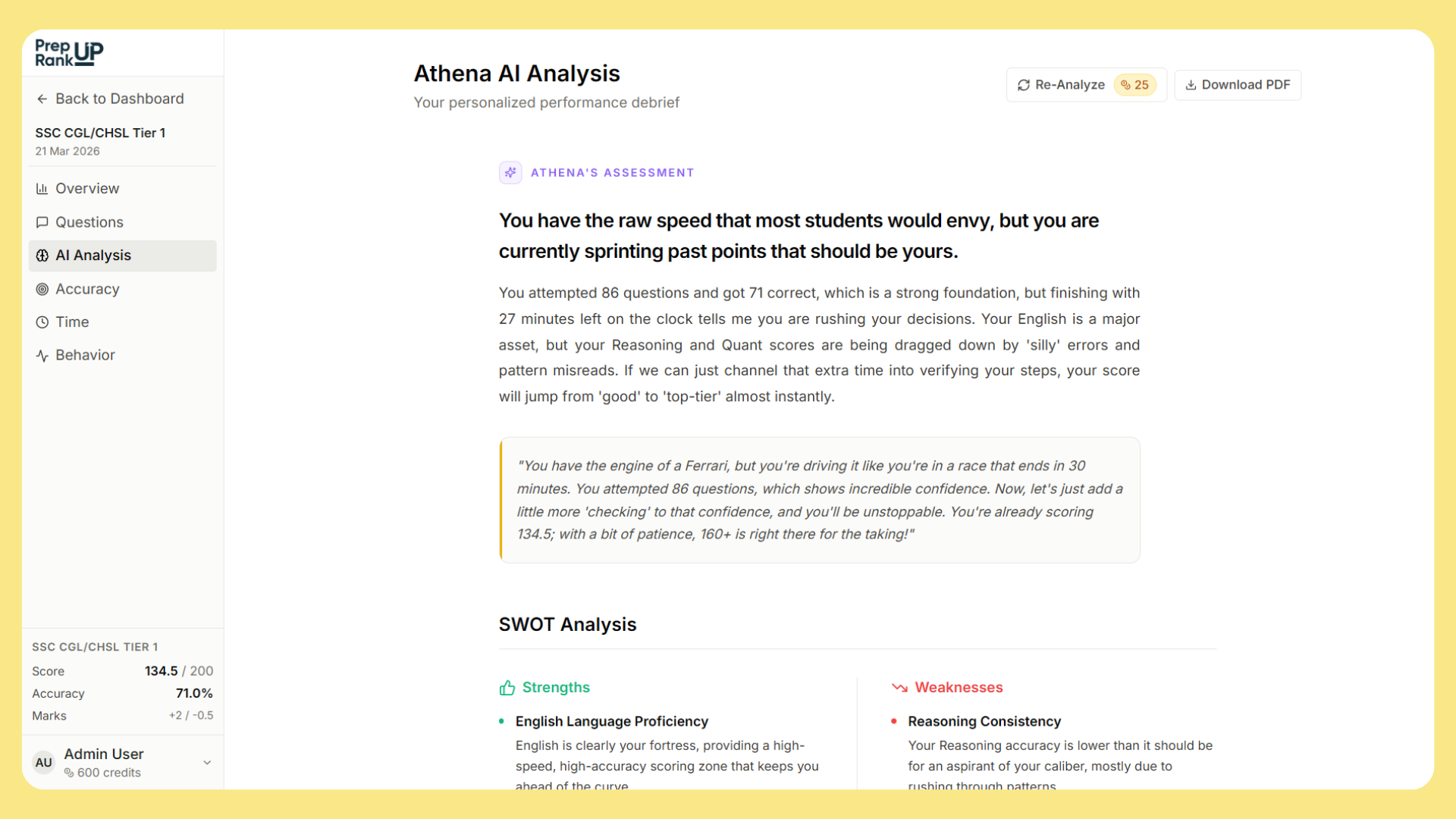
Read Athena recommendations
Step 03

Fix behavior and execution

Review where answer changes, hesitation, and rushed attempts cost marks, then lock a better attempt plan for the next mock.
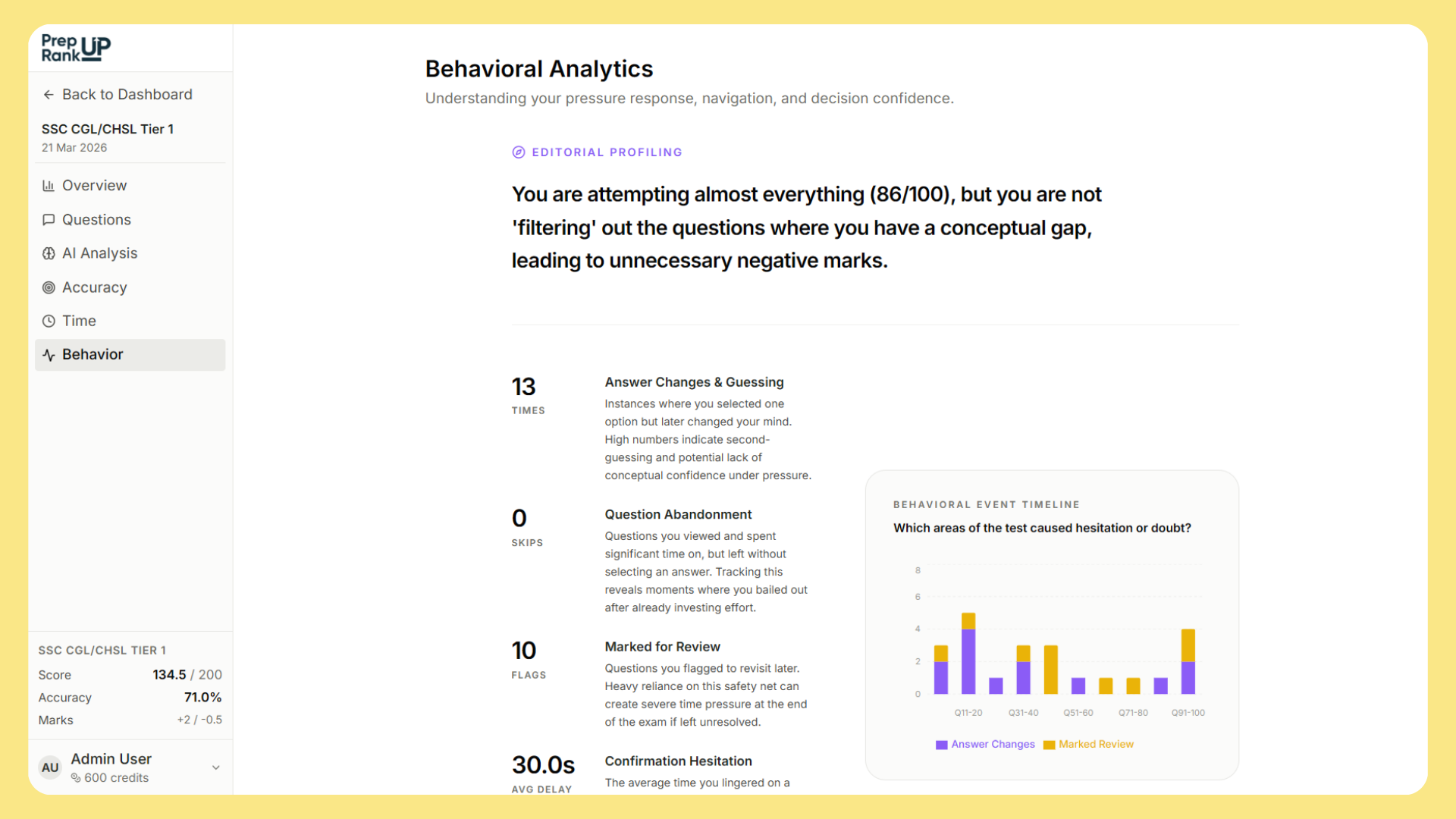
Fix behavior and execution

Quick checks after each test

  • Topic accuracy before total score
  • Questions where time spent did not convert to marks
  • Answer changes that reduced your score
  • One section to push and one section to protect in the next mock

Plan before your next attempt

1Keep the same section order for two mocks in a row.
2Set a strict skip rule for low-conversion questions.
3Run one focused drill between mocks on the worst topic.
4Compare this attempt with your previous one before changing strategy again.
Score Leakage

Why scores get stuck after many mocks.
Find the leak, then fix execution.

Generic feedback loop

Most platforms only tell you score and rank.

Fix: Review topic accuracy and attempt quality before opening the next mock.

Second-guessing right answers

Answer changes quietly remove marks in the final 15 minutes.

Fix: Lock medium-confidence questions and limit revisions to flagged high-value items.

Time spent without returns

Long time on low-conversion questions creates panic in easy sections.

Fix: Follow a fixed skip rule and preserve time for high-hit-rate topics.
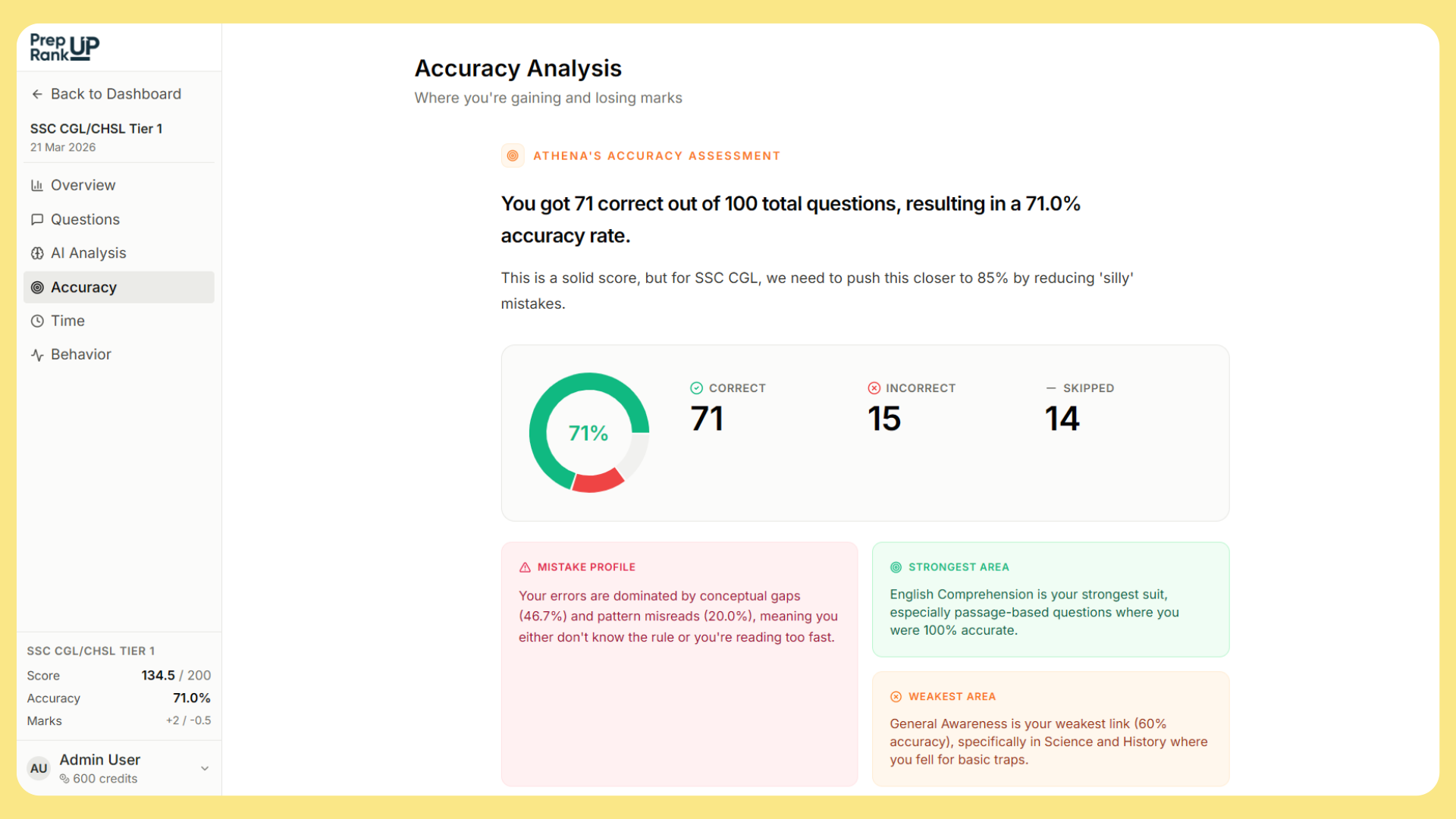
Topic accuracy breakdown

Section score is not enough. Topic-level accuracy tells you what to push this week and what to postpone until after your next test cycle.

Time and Comparison

Build timing discipline that survives pressure.
Use rules in one test, then validate over multiple tests.

Execution rules for your next mock

  • Set a max-time threshold per question before the test starts.
  • Complete your strongest section first when confidence is low.
  • Do one review pass only for marked questions with clear elimination value.
  • Validate progress with 3-test comparison, not one lucky test.

Section timing guide (60 min)

Reasoning

High accuracy, fast conversion

14-15 min

General Awareness

Quick attempts, no overthinking

8-10 min

Quantitative Aptitude

Controlled attempt and skip discipline

19-21 min

English

Steady pace with low negative marking
12-14 min
Multi-test comparison dashboard
Latest SSC Experience

Built for post-mock decisions,
not only post-mock scores.

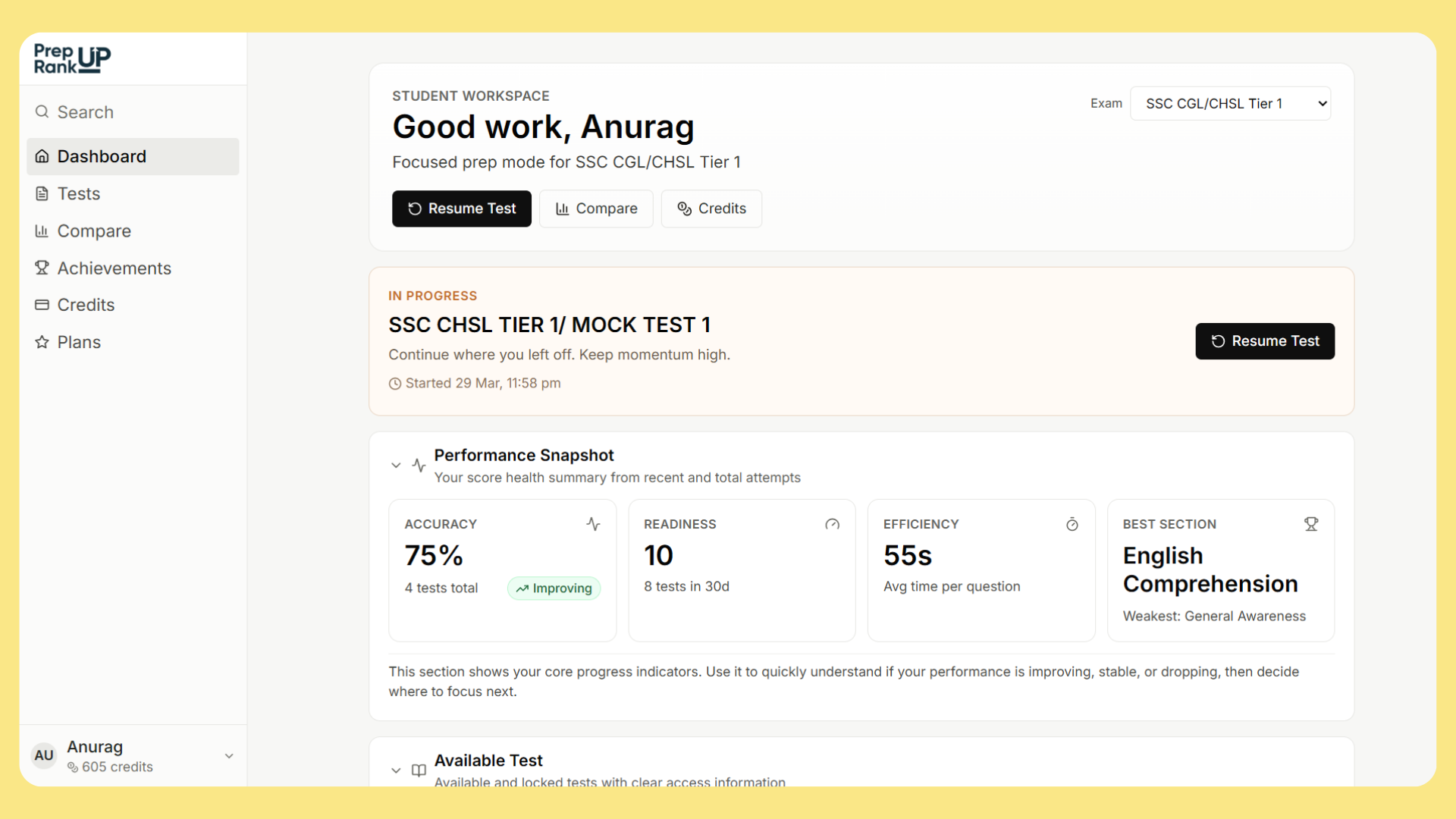
The lower half of this page now mirrors the current home experience: visual analysis, execution diagnostics, and clear next actions.
What you get in this flow

  • Six result tabs: overview, questions, AI analysis, accuracy, time, behavior
  • Question-level timing and answer-change tracking
  • Athena AI recommendations tied to your exact attempt
  • Multi-test comparison to verify real progress
  • Actionable next-mock plan instead of generic motivation
PrepRankUp dashboard

Quick comparison

FeatureOthersPrepRankUp
Mock test interface
Score and rank
Topic-level accuracy clarity~
Behavioral diagnosis
Answer-change impact
AI action plan from your own attempt
Comparative test analysis

SSC FAQs

Updated for the current SSC experience.

Most tools stop at score and rank. PrepRankUp breaks performance into topic accuracy, time usage, and behavior so you can fix the exact reason marks are leaking.

Not required. Many students use PrepRankUp as the analysis layer and keep their existing test routines. The goal is better decisions between mocks.

That is the core use case. Plateaus are usually execution issues, not syllabus gaps. The SSC result tabs are designed to reveal those execution leaks quickly.

The current experience is focused on SSC CGL, SSC CHSL, and SSC MTS workflows.

Your next score jump starts with one clean review cycle.

Take a mock, read the six tabs, apply one focused plan, and validate in the next test.

Free to startAI-powered SSC diagnosticsDesigned for score plateaus